

What is the structure of a tooth and what functions do each of the layers that make up the tooth structure perform?
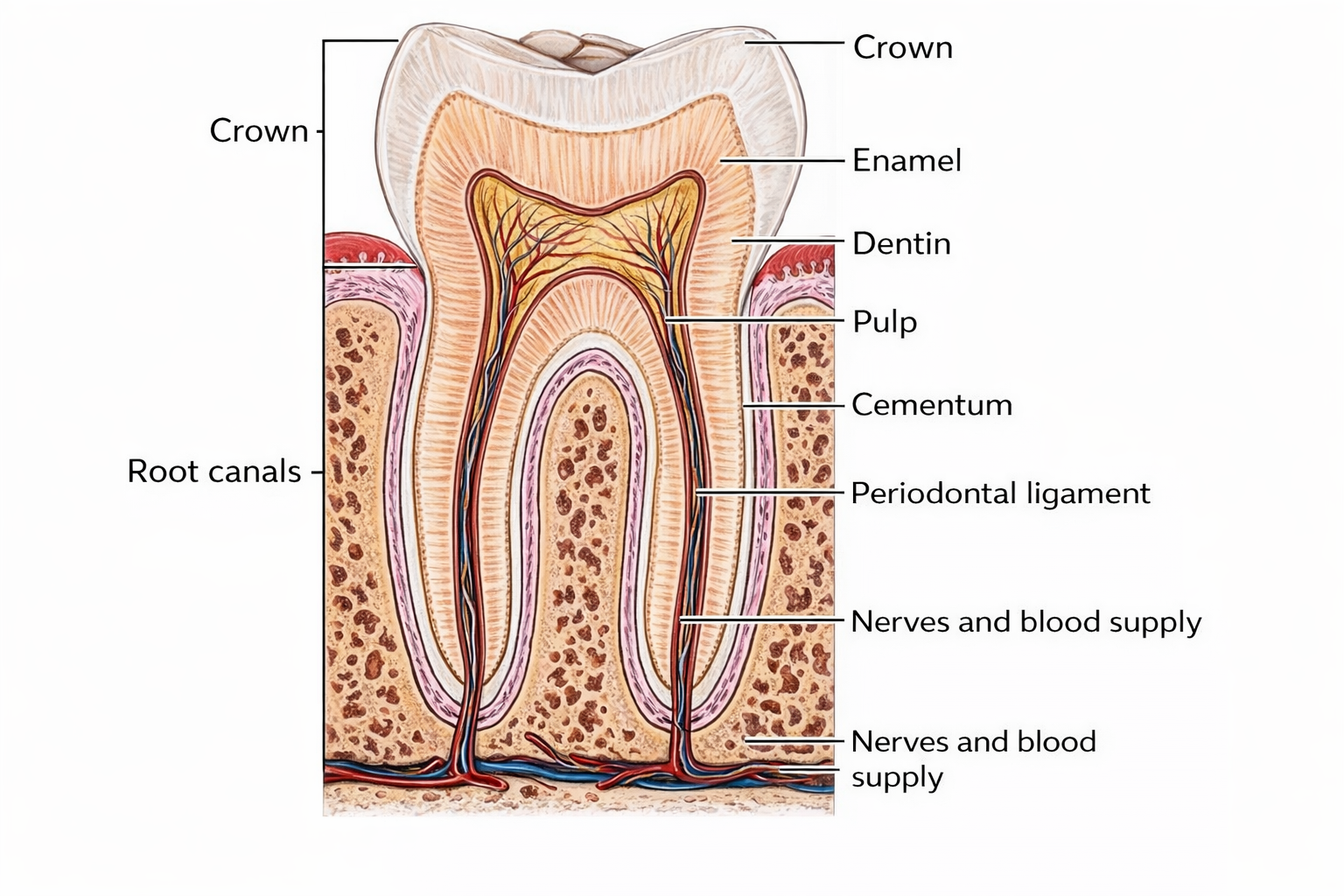
A tooth may appear solid, but it actually has a complex structure. It consists of several different parts and layers, each performing a unique function. The four parts of a tooth are cementum, pulp, dentin, and enamel.
Enamel
Enamel is the hardest and most mineralized part of the human body. Thanks to its hardness, we are able to chew and grind food. But this is also what makes it prone to breakage and cracking.
Enamel is the outer layer of the tooth that covers the dentin.
96% of enamel consists of mineral (crystalline calcium phosphate) and the remaining 4% is water and organic matter. The normal color of enamel varies from light yellow to grayish-white.
Tooth enamel can undergo a process called demineralization if the pH in the mouth falls below normal levels. The combination of bacteria and sugars from certain foods, snacks, soft drinks, and sweets can generate an acidic environment. Over time, this environment slowly “dissolves” the enamel and creates conditions conducive to tooth decay.
Dentine
Dentin is the tissue between the enamel and the pulp chamber. Dentin is mineralized connective tissue with an organic matrix of collagen proteins. It consists of 70% inorganic materials, 20% organic materials, and 10% water. Since it is softer than enamel, it is more susceptible to caries. It determines the shape, size, and color of the teeth.
Cementum
Cementum is a bone-like substance that covers the root of the tooth. It consists of approximately 45% inorganic material (mainly hydroxyapatite), 33% organic material (mainly collagen), and 22% water. The main role of cementum is to serve as a means of attachment to the periodontal ligaments, i.e. to stabilize the tooth in its place.
Pulpa
The pulp, or root canal, is the central part of the tooth filled with connective tissue. This tissue contains blood vessels and nerves that enter the tooth through the root. The main role of the pulp is to form dentin through biological cells on its outer surface, called odontoblasts, and to provide nutrients to the rest of the tooth.
The pulp is the sensory part of the tooth that detects temperature when we consume food and beverages and the onset of caries. Among the cells that make up the pulp are white blood cells, such as macrophages and T lymphocytes.
It is also called the “nerve” of the tooth.